Private capital investment intentions remain strong, despite weaker economic outlook
- 84% of private capital firms expect to increase or maintain investment in UK businesses despite a weak economic outlook.
- Industry has £207bn of ‘dry powder’ available to invest in the next three to five years.
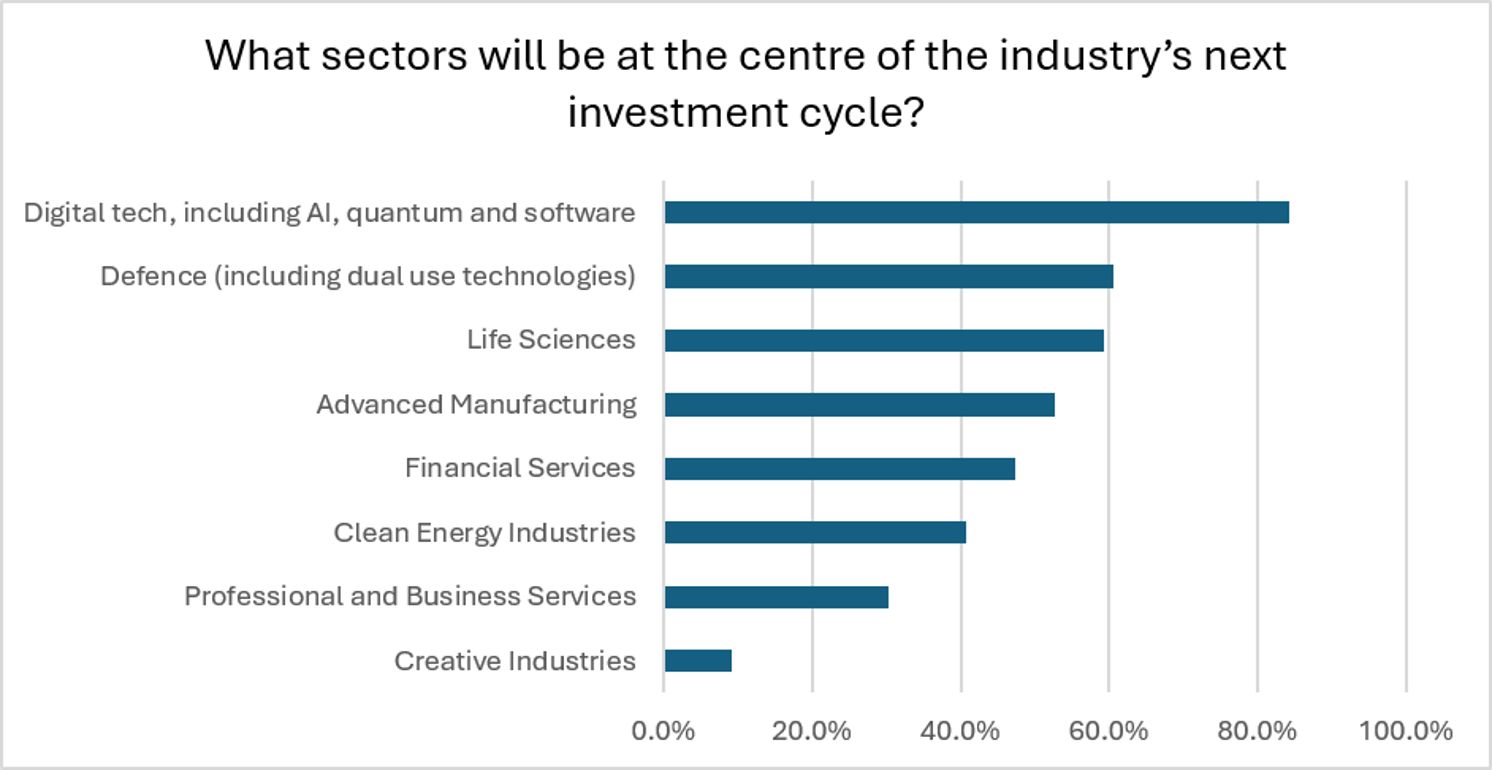
- Firms expect that technology (including AI), life sciences and defence sectors will drive investment in the future.
- UK Private Capital is calling for the upcoming Budget to be pro investment and prioritise a stable tax environment.
A new survey of private equity and venture capital firms has found that the industry plans to increase investment in British businesses over the next five years, despite a fall in confidence about the UK’s economic outlook.
The findings are part of a survey of senior decision makers at leading private equity and venture capital firms carried out by trade association UK Private Capital, ahead of its annual Summit.
The UK Private Capital Summit brings together over 1,300 industry leaders from across private capital, including fund managers, institutional investors and family offices. Speakers at the event include City Minister Lucy Rigby KC MP, Chief Executive of the FCA, Nikhil Rathi and Nathanaël Benjamin, Executive Director, Financial Stability Strategy and Risk at the Bank of England.
UK Private Capital’s latest Private Capital Pulse survey has found that more than eight in 10 firms (84%) intend to increase or maintain the amount they invest in UK businesses over the next five years. This is despite four in 10 (41%) industry leaders expressing pessimism about the outlook for the economy over the same period.
The strong investment intentions are consistent with sentiment when UK Private Capital last surveyed its members in February 2026. At that time, 85% of firms expected to increase or maintain investment. However, views on the outlook for the economy have declined from earlier in 2026 when industry figures were more likely to hold an optimistic view of the UK’s economic outlook.
Respondents who intend to invest more cited the strength of the UK’s life science and technology sectors, the UK’s highly skilled workforce, strong professional services and top universities as reasons for doing so. Investment intentions are also supported by a balance of firms believing the UK is an attractive place to build a business.
Those who expect to invest less highlighted increases to capital gains tax and carried interest, alongside noting that other jurisdictions have become more competitive during the same period. Geopolitical headwinds, and the rising tax burden were also highlighted by respondents who held a negative view of the economy.
Q. Are you more or less likely to invest in the UK in the next five years compared to the last five years?
|
February 2026 |
September 2026 |
||
|---|---|---|---|
|
Likely to invest a lot more |
8% |
3% |
|
|
Likely to invest more |
34% |
39% |
|
|
Likely to invest the same |
44% |
41% |
|
|
Likely to invest less |
12% |
16% |
|
|
Likely to invest a lot less |
3% |
1% |
Q: How optimistic are you about the economic outlook for the UK over the next five years?
|
February 2026 |
September 2026 |
||
|---|---|---|---|
|
Very optimistic |
2% |
1% |
|
|
Optimistic |
27% |
21% |
|
|
Neutral |
44% |
37% |
|
|
Pessimistic |
25% |
36% |
|
|
Very pessimistic |
3% |
5% |
Q. What is your view on the attractiveness of the UK as a place to build a business?
|
February 2026 |
September 2026 |
||
|---|---|---|---|
|
Excellent |
9% |
1% |
|
|
Good |
41% |
34% |
|
|
Fair |
39% |
38% |
|
|
Poor |
10% |
22% |
|
|
Very poor |
2% |
4% |
Note figures are rounded to the nearest whole number which accounts for the totals being between 99% and 101%
The UK private capital industry has £207bn of dry powder available for its next investment cycle, with digital technology, defence and life sciences leading priorities.
This latest survey compliments additional new findings by UK Private Capital, which shows that UK-managed private equity and venture capital funds have approximately £207bn of committed but un-invested capital available as of the end of 2025. This capital is expected to be deployed over the next three to five years, with historical trends suggesting that around half will be invested domestically.
Pulse survey findings indicated that digital technologies and life sciences businesses will provide the strongest investment opportunities in the coming years. Asked what sectors will be at the heart of the next investment cycle, 84% of respondents highlighted digital technology which includes artificial intelligence, quantum computing and software. Defence and dual use technology also continues to place very highly on investors list of priorities, with more than six in ten (61%) highlighting the sector, followed by over half of investors (59%) who say the same for the life sciences.
UK Private Capital calls for a pro-investment Budget
UK Private Capital’s Budget submission highlights several areas where Government can improve the UK’s competitiveness and attractiveness as a destination for capital, entrepreneurship and innovation. Among its recommendations, the Association is calling for the Chancellor to:
- Provide stability on taxation. Government must avoid further changes to capital gains tax or carried interest and provide stability and predictability across the wider tax environment.
- Continue regulatory reform at pace. Reviews of key frameworks affecting private capital, including the Alternative Investment Fund Managers regime, regulatory reporting, remuneration and prudential requirements, should focus on ensuring that the UK's regulatory framework supports innovation, investment and the international competitiveness of UK financial services.
- Support scale-up Britain. Government should strengthen growth finance by modernising EIS and VCT rules and introducing a Scale-up Reinvestment Relief to encourage founders and investors to recycle capital and expertise into UK scale-ups and R&D-intensive companies.
- Mobilise domestic capital to invest in the UK. Government should introduce further measures to increase pension fund investment into UK venture and growth capital, strengthening the role of the British Business Bank in supporting regional investment ecosystems, and backing initiatives such as the British Growth Partnership and UK Scale-Up Fund.
“The private capital industry remains committed to backing UK businesses, with most firms expecting to maintain or increase their investment in the UK over the next five years. This reflects continued confidence in the long-term strengths of the UK as a place to build a business and the innovative companies driving growth across the country.
“At the same time, firms are clearly becoming more cautious about the wider economic outlook. We therefore welcome the Chancellor’s ambition to see more wealth creation and business profit to drive growth across the UK. Our industry can help deliver that growth, but to do so, the upcoming Budget must provide stability on taxation and a focus on making the UK more competitive, so capital continues to be raised, managed and invested in the UK.”

Notes to Editors:
For further information, please contact:
UK Private Capital Press Office
Email: [email protected]
About the Private Capital Pulse survey
UK Private Capital surveyed 76 senior decision makers in private equity and venture capital firms between 07 August and 03 September 2026.
Survey respondents invest across the whole of the UK and at all stages of the private capital investment lifecycle - ranging from seed stage venture capital investors up to large private equity firms. Respondents included investment firm founders / partners, investment directors, finance teams and investor relations professionals.
Dry Powder Methodology
‘Dry powder’ refers to the total amount of committed but un-invested capital under management of private equity and venture capital funds.
UK Private Capital estimate for dry powder includes information from over 2,000 venture capital, growth equity and private equity funds managed from the UK.
Firm & fund level dry powder information for UK Private Capital members is collected as part of an annual activity survey via the European Data Cooperative platform. If dry powder data is not provided as part of the submission, it is estimated based on historical data and adjusted for submitted fundraising and investment amounts. Dry powder information for non-members with funds managed from the UK is based on fund size data obtained from public sources, factoring in fund vintage year and typical capital deployment schedule.
The following funds are excluded from the statistics: infrastructure funds, real estate funds, private debt funds, distressed debt funds, funds of funds, accelerator/incubator funds, business angel activity.
About UK Private Capital
UK Private Capital is the industry body and public policy advocate for the private equity (PE), venture capital (VC) and private credit ecosystem in the UK. With a membership of 600 firms, we represent UK-based private capital firms, as well as their professional advisers and a large base of UK and global investors. The private equity, venture capital and private credit industry has a vital role to play in driving national and regional growth. Currently over 13,000 companies, employing more than 2.5 million people, are backed by private capital investment in the UK.