How agentic AI is rewiring venture capital
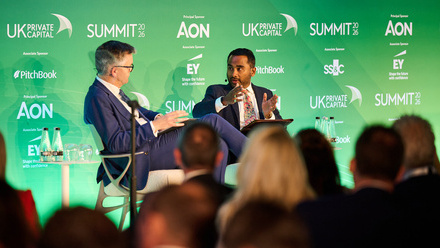
Rob Leclerc, Founding Partner at AgFunder, looks at how agentic AI is reshaping venture capital, the role of institutional memory in building competitive advantage, and why human judgement and oversight remain essential.
When we started AgFunder in 2013, we recognised early on that venture capital is fundamentally an information business. Yet the industry has historically faced challenges in retaining and sharing institutional knowledge. For decades, firms have relied on fragmented CRM systems, siloed deal memos, and the recollections of individual partners.
If the last decade of private markets was about the digitisation of deal flow, I believe the next will be defined by the integration of agentic artificial intelligence. We are moving from systems that passively store information to AI teammates that actively remember, synthesise, and act.
Having done my PhD in evolutionary computational biology and studied AI in the early 2000s, I have been waiting for this inflection point for a long time. Today, the pace of technological change is so rapid that the only thing that can keep up with AI is AI itself.
From passive retrieval to agentic action
For the past ten years at AgFunder, we’ve built and relied upon an internal platform called GAIA to track millions of companies and diligence our investments. But through the early LLM years, it remained a static knowledge base: you asked it a question, and it retrieved an answer. It wasn’t a teammate, and it didn't work autonomously towards goals.
Everything changed recently with the arrival of new agentic models. To stress-test how far we could push these workflows, I built a multi-agent system designed to autonomously source, research, draft, and edit deeptech news stories. The result was a system capable of taking in over 5,000 market signals per hour and generating upwards of 1,000 narratives daily.
I gave the AI reporters a way to ask sources for comment. To test it, I suggested they interview me for a story. Without any further instructions, the system signed up for a calling service, found my number and rang me. By the next morning, the reporters had contacted about a hundred people on their own, and replies were already in our inbox. I turned the system off.
That experiment highlighted an important lesson for the broader private capital market: agentic software can act, rather than simply respond. However, autonomy without appropriate oversight introduces risks that may not be fully accounted for. As research, drafting, and outreach become less costly, the challenge shifts towards assessing what is credible, what has changed, and what deserves human attention.
Building the firm that remembers
This realisation is why we are now building GAIA Brain, an institutional memory that functions as an active member of our investment team.
GAIA Brain has read everything our firm has ever touched: every founder call transcript, every passed deal memo, and every market map across a decade of work. Instead of spending days reconstructing context, our team can now ask the AI what a specific founder promised two quarters ago, or which portfolio company would be the strongest commercial partner for a new prospect. It instantly matches internal relationship data with external market signals, surfacing not just names, but the context needed to activate a warm introduction.
Implementing this into real-world investment workflows is not without friction. Off-the-shelf models still suffer from incomplete retrieval or provide correct answers that miss the contextual trust layers a human investor requires. Fixing these failures is where the real work lies today.
The new competitive moat
As API access to frontier models becomes ubiquitous across London and Silicon Valley, the baseline reasoning engines of AI will soon be commodities. Every VC and PE firm will have access to the same foundational intelligence. So, where does the competitive advantage lie?
I believe the moat of the future is proprietary history. A general-purpose model will never have access to a firm's private deal flow history or the nuance of its relationships. The winners in this next era of venture will be the firms that successfully connect capable, supervised agents to this proprietary memory, without losing the source trail, the permission boundaries, or the human point of view.
Venture capital will continue to depend on trust, taste, ambition, and engagement with the physical world. AI makes sound judgement more important, not less. By reducing the burden of memory and data synthesis, it allows us to focus on these priorities. As AI lowers the cost of taking action, human judgement remains central to investment decisions.

Authored by Rob Leclerc, Founding Partner at AgFunder