Demonstrating the value in sustainability
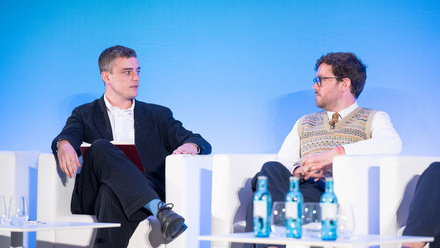
James Thompson, Managing Director, Sustainability and ESG Advisory at CFGI discusses the difficulties in demonstrating the value in Sustainability and provides insight into the underlying reasons for this challenge.
James reflects that, whilst financial reporting communicates well the short-term and direct effects on a business, sustainability reporting is designed to communicate the long-term and indirect effects that might otherwise be missed.
Companies of all shapes and sizes are grappling with the challenges of sustainability reporting, and with the pushback against regulatory overreach subsiding boards and investors are now asking a common question: Where is the real value in sustainability?
Many studies statistically demonstrate that companies with sustainability programs have better valuations, for example a recent synthesis report by the World Business Council for Sustainable Development (WBCSD) on how sustainability performance influences company valuation highlighted over half of deal makers expect to pay a premium for companies with green credentials. However, while many recognise the value of sustainability, others still don’t and we keep having to make the case.
Why?
Because isolating sustainability’s contribution to a valuation model is not straightforward.
The Reason
The fundamental mistake is trying to explain sustainability issues using financial metrics alone as we’re missing the fundamental point of what Sustainability reporting is. To understand it we should first understand financial reporting.
Speaking with my accounting advisory team, a set of financial statements are a complete translation of a business using a language of financial accounting. Revenue, liabilities, expenses, salaries etc. every activity or decision has a financial element to it. It's an extremely effective language but like all languages, it has its limitations. In this case, it is very good at communicating the direct and the short term. It is not very good at communicating the long term or the indirect. That’s why companies focused solely on financial metrics tend to prioritise the immediate and the measurable.
Sustainability reporting is about creating a new language. A language that also aims to describe the same business activities and decision making. The key difference is the sustainability language is designed to be better at communicating the long term, and the indirect. Reducing your workforce by 50% appears in financials as a short-term cost saving. But you need the sustainability lens to recognise that doing so damages the morale of the remaining employees who may have lower output going forwards.
We shouldn't be trying to communicate sustainability solely through financial metrics. Instead, we need to think about sustainability and financial reporting as two separate communications of the same business. Demonstrating the value of sustainability using the ‘wrong’ language will always fall short.
The Solution
The solution is sustainability reporting but we’re many years away from it being a driver of how a business and its value is perceived. In the interim how can we describe the value of sustainability in existing financial modelling? In summary:
- Sustainability makes the financial valuation reliable; it reduces the uncertainty in the long-term forecasting.
- Sustainability converts unknown unknowns to known unknowns. I.e. you recognise the strategic issue though might not know what the financial implication will be.
- Only when a Sustainability matter reaches the point of being short term and direct, will it feature in your cash flows. For example, changes in consumer buying patterns of electric vs combustion vehicles.
While the third point is directly captured in the cashflow models, the first two need to be captured indirectly through the discount rate or multiple that gets applied to cashflows. As my valuation colleagues keep telling me, determining the multiple is as much an art as a science. Multiples reflect many factors such as perceived quality of management, the resilience of the business model and the risk associated with future cashflows.
That is where the long-term value of sustainability is realised: in the multiple.
Perceived Value
Until now I have focussed on intrinsic value - the value that your company can actually expect to realise over time based on current facts and circumstances. But there is another layer of value to consider.
Perceived value is shaped by how investors feel about a business. It comes from the narrative they construct in their minds, and this is heavily influenced by the vision they’re sold. The more compelling and coherent that story is, the more likely it is to be embraced and internalised.
It’s probably fair to say that Sustainability hasn’t historically had a problem with storytelling. However, with the introduction of reporting regulations, and the transition from communications-led ESG to compliance-led ESG, we have forgotten the power and importance of a good story!
Reports are becoming technical, bland, and repetitive. Worse they are becoming boilerplate. A good disclosure, a good report, reveals the value of a business. A great disclosure uses the words on the page to communicate the potential value of a business by encouraging a reader to think about what could be achieved.
Don’t get me wrong, I’m not suggesting we revert to baseless claims and selective descriptions. Readers are now more aware, more sceptical and can see through surface level disclosures. As someone who reads (and helps write) sustainability reports, you can tell when a sustainability program lacks substance.
So, what’s the solution?
It’s to build a solid foundation upon which to tell your story. You need to be rigorous in data collection; you need to consider the trade-offs, costs, and caveats of a sustainable action; you need to create a long-term, coherent, sustainability strategy. It is using this foundation that you can weave your story. You don’t include all the detail but enough that readers recognised the substance underneath.
To conclude I firmly believe there is value to a company in Sustainability, but this value is not always best communicated through trying to directly tie sustainability to financial metrics. The value emerges through:
- Identifying long-term and indirect factors that influence risk
- Improving forecasting reliability that incorporates sustainability considerations
- Translation of these factors in to discount rate and multiples
- Telling a good story with substance

Authored by James Thompson,
Managing Director, Sustainability and ESG Advisory, CFGI
The opinions expressed in this article are those of the authors. For more insights from CFGI, visit Accounting Advisory | CFGI